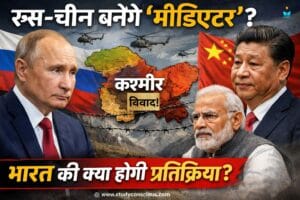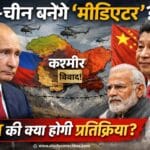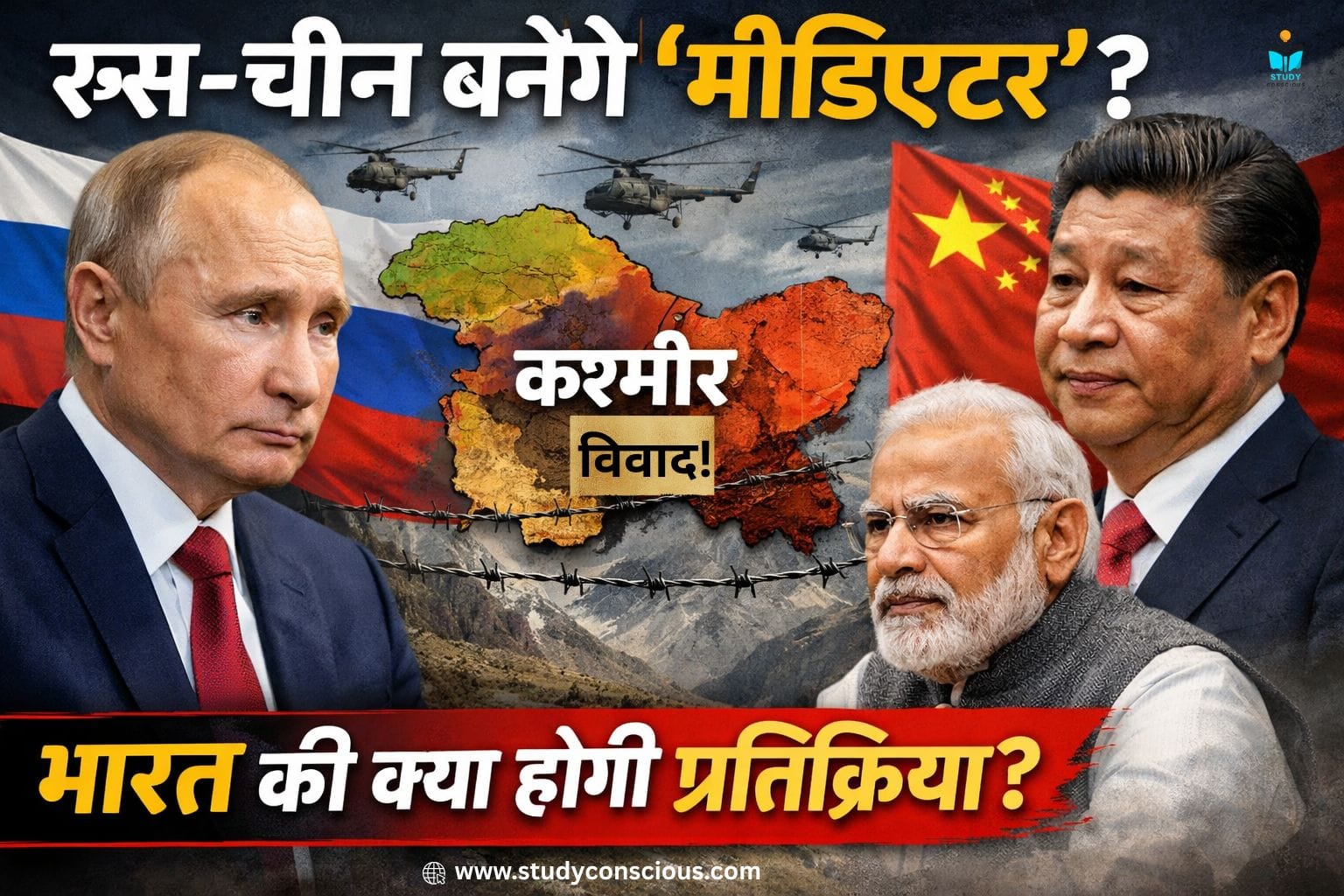
Pakistan has named Russia and China as possible mediators in resolving the Kashmir dispute. This has reignited discussion about whether India would be open to any kind of third-party intervention.
पाकिस्तान ने कश्मीर विवाद को सुलझाने के लिए रूस और चीन को संभावित मध्यस्थ के तौर पर नामित किया है। इससे यह चर्चा फिर से शुरू हो गई है कि क्या भारत किसी भी तरह के तीसरे पक्ष के दखल के लिए तैयार होगा।
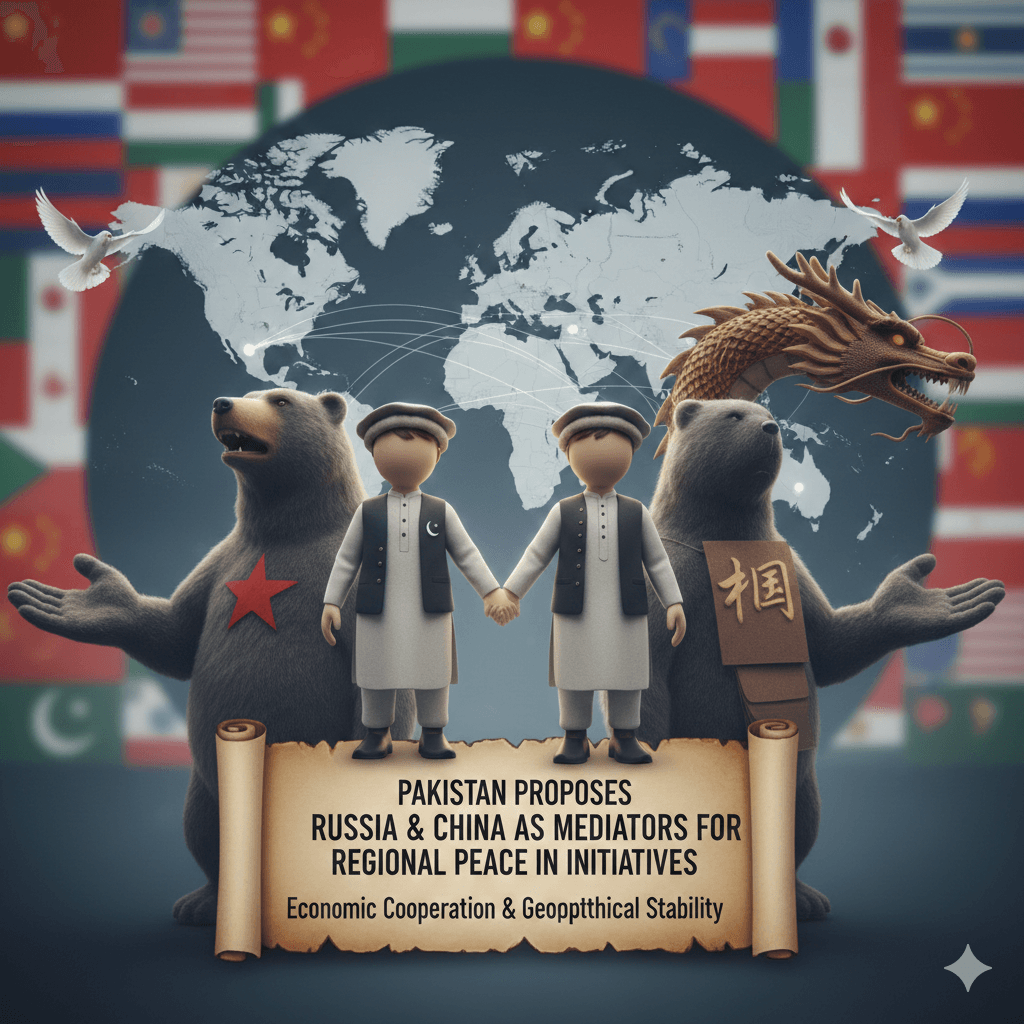
1️⃣ Why Did Pakistan Propose Russia and China as Mediators?
The Pakistani proposal to involve Russia and China as mediators in the Kashmir dispute is based on the following strategic considerations:
🔹 (a) Internationalization of the Kashmir Dispute
- For several decades, Pakistan has been attempting to internationalize the Kashmir dispute through international forums such as the United Nations. Through the proposal of major world powers such as Russia and China, Islamabad seeks to:
- Internationalize the dispute from bilateral negotiations to international diplomacy
- Exert international pressure on India
- Globalize the Kashmir dispute as a global security issue
🔹 (b) Strategic Partnership with China
- China is Pakistan’s most trusted strategic partner, particularly through initiatives such as the China-Pakistan Economic Corridor (CPEC). As CPEC passes through Gilgit-Baltistan, China has a direct geopolitical stake in the region.
- Through the proposal of China as a mediator, Pakistan seeks to demonstrate its trust and confidence in China’s diplomatic support.
🔹 (c) Exploiting Global Politics
- Pakistan may also be trying to:
- Offset the increasing strategic partnership between India and the US
- Exploit the politics of multipolarity in global politics (Russia-China vs. the West) to create diplomatic space for itself
- Demonstrate its willingness to negotiate while shifting the onus on India
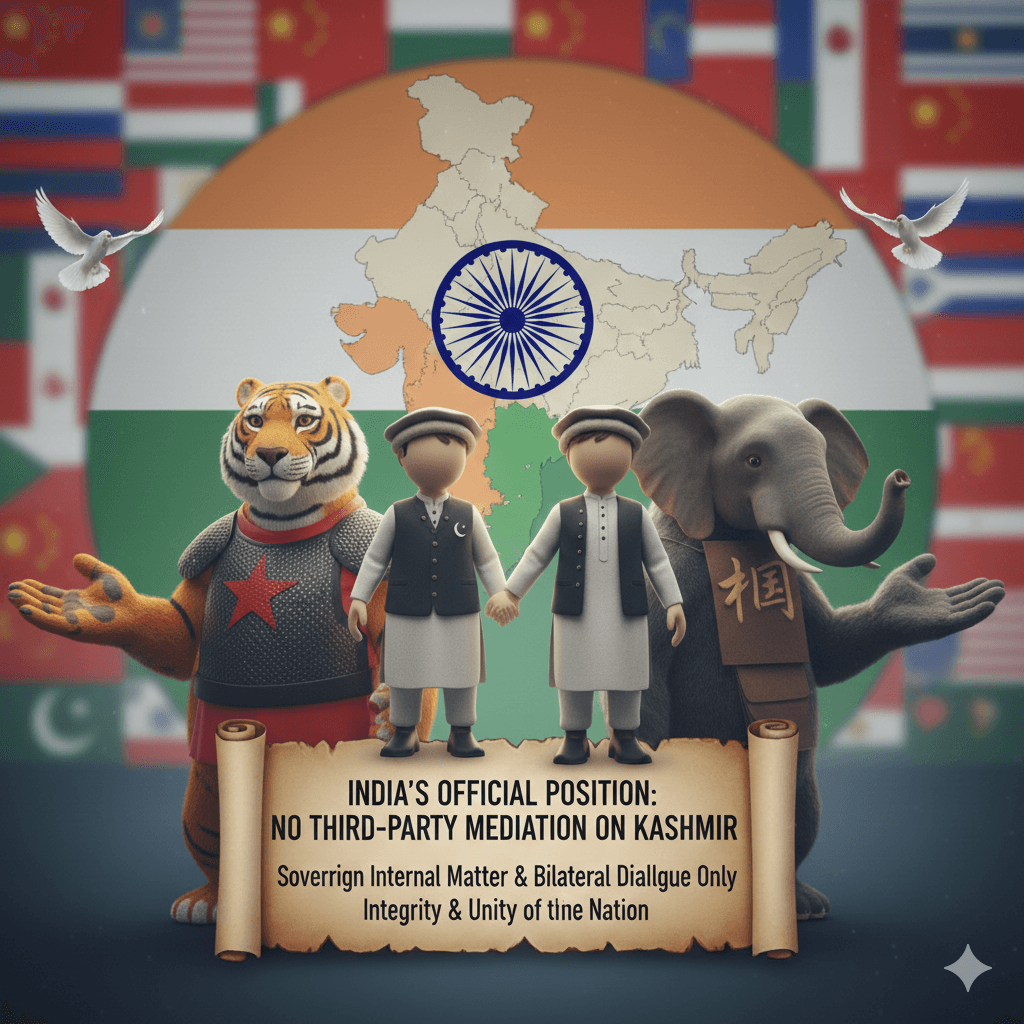
2️⃣ India’s Official Position on Kashmir Mediation
India’s official position has been clear and uncompromising:
🇮🇳 Kashmir is a Bilateral Issue
- India’s official position is that Jammu & Kashmir is an integral part of India. Any pending issues with Pakistan can be sorted out bilaterally and not through mediation.
📜 Based on the Shimla Agreement (1972)
- The Shimla Agreement has made it abundantly clear that the issues between the two countries will be sorted out bilaterally. India holds this position as binding on them.
🚫 No Third-Party Role
- India has turned down offers of mediation from:
- The United States of America
- The United Nations
- Or any other major world power
3️⃣ Historical Background of India’s Kashmir Policy
- Historical background is essential to understanding this problem:
- 1947-48: Accession to India
- The Instrument of Accession to India was signed by Maharaja Hari Singh after tribal raids led by Pakistan.
- UN Involvement (Late 1940s)
- India first turned to the UN. Later, the Indian government grew disenchanted with internationalizing the dispute.
- 1972: Shift to Bilateralism
- The Shimla Agreement, signed after the 1971 war, represented a significant change in policy:
- Multilateral to exclusively bilateral resolution of the dispute
- The Line of Control (LoC) as a de facto border
- Post-2019 Developments
- Since the abrogation of Article 370 in 2019, India has reaffirmed that its constitutional affairs lie outside international mediation.
4️⃣ Global Response and Diplomatic Implications
🌍 Likely Global Response
🌍 Likely Global Reaction
- Western countries generally support bilateral dialogue.
- Russia traditionally maintains balanced ties but strong defense relations with India.
- China’s involvement is viewed by India through the lens of strategic rivalry.
🧭 Diplomatic Implications
(a) Increased India-China Tension
- If China positions itself as mediator, India may interpret it as geopolitical maneuvering rather than neutrality.
(b) Regional Stability Concerns
- Third-party mediation debates may increase diplomatic friction, even if no mediation actually occurs.
(c) India’s Global Positioning
India’s rejection reinforces:
- Its sovereignty-based foreign policy
- Its emphasis on strategic autonomy
🧠 Conclusion
- Pakistan’s offer is more of a diplomatic gesture than a realistic breakthrough.
- India’s long-standing policy, based on sovereignty, bilateralism, and historical agreements, makes it highly unlikely to accept third-party mediation.
- This incident also brings to the fore the larger geopolitical chessboard of South Asia, where regional disputes are increasingly entwined with global power politics.
Our Recent Blogs:
Sarvam AI Explained: How India Is Developing Its Own ChatGPT-Like AI
BNP’s Big Victory in Bangladesh: PM Modi Talks to Tarique Rahman, Calls for Peace and Progress
PM Modi Inaugurates New PMO ‘Seva Teerth’, Begins Work with Big Policy Decisions
Epstein Row Explained: Why Congress Questioned Hardeep Singh Puri and What the Minister Said
Ind vs Pak T20 World Cup 2026: India Hammer Pakistan by 61 Runs
#KashmirIssue #IndiaPakistanRelations #KashmirMediation #InternationalAffairs #RussiaChina #GlobalPolitics #WorldNews #IndiaForeignPolicy #BreakingNews #KashmirIssue #IndiaPakistanRelations #KashmirMediation