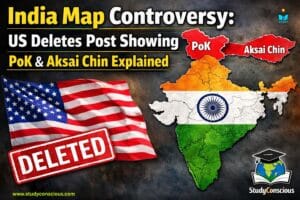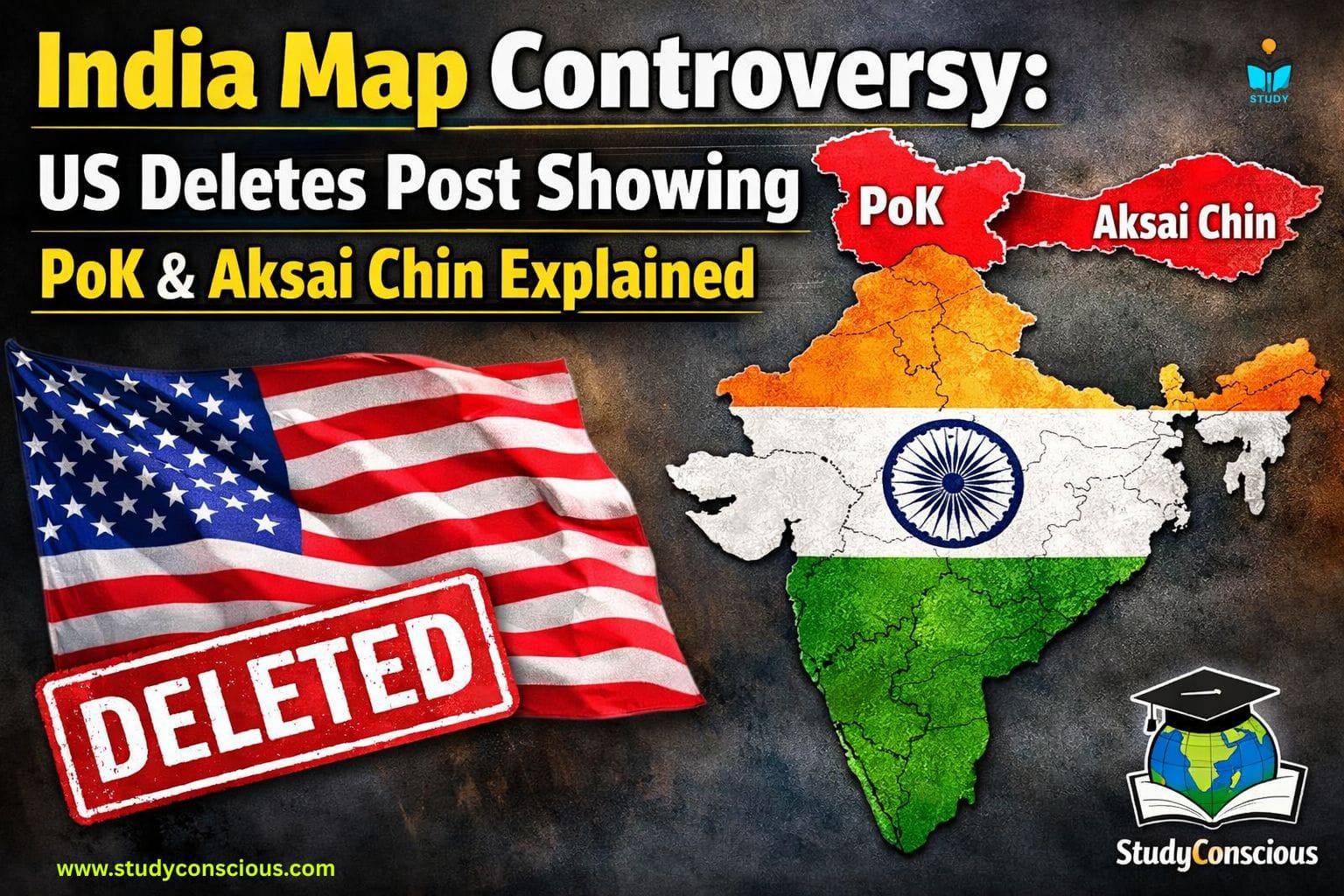
Yet another controversy has recently emerged as the Office of the United States Trade Representative (USTR) posted a map of India featuring Pakistan-occupied Kashmir (PoK) and Aksai Chin.
The tweet has since been deleted, spurring numerous debates and speculations. The sudden deletion has sparked serious concerns regarding an apparent policy shift by the United States, including the political intricacies of India’s territorial integrity.
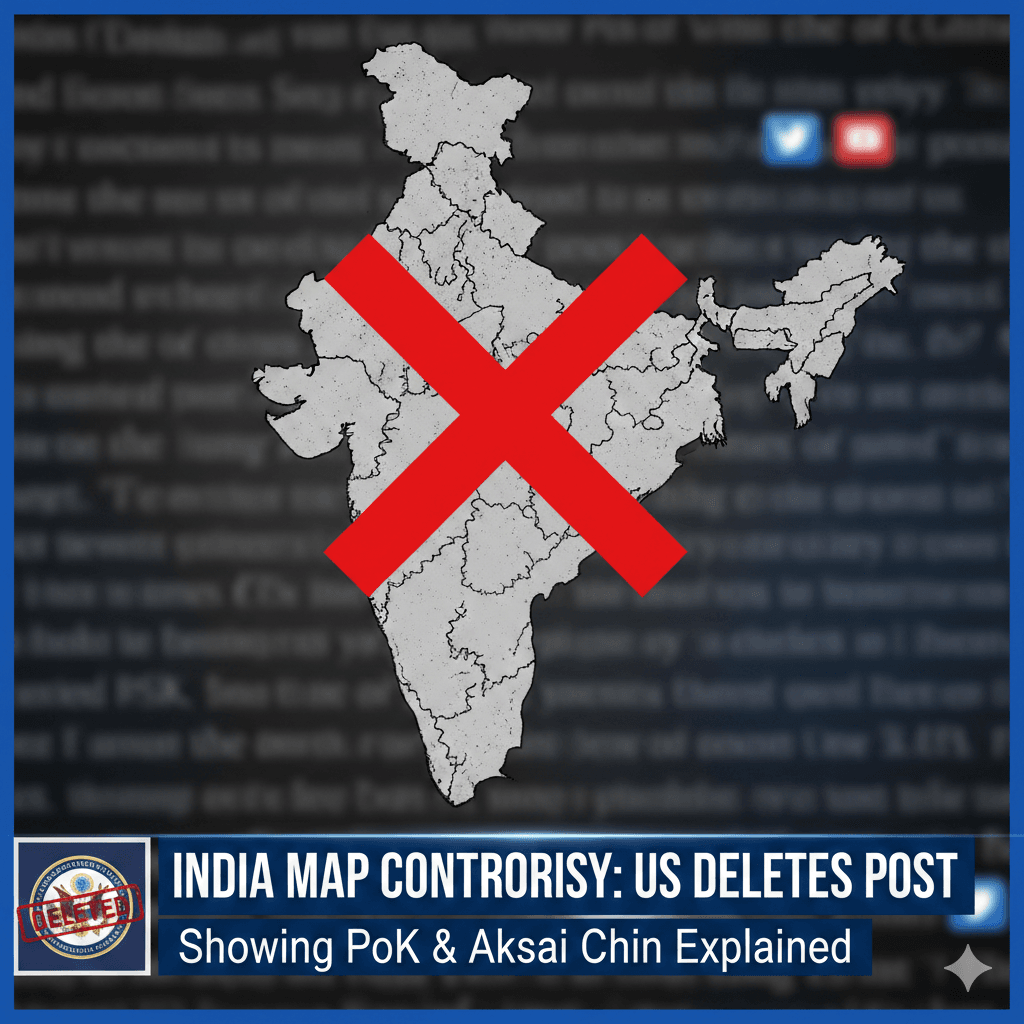
What did the India map posted by the US office actually depict?
A post by the US Trade Representative’s Office had put up a map of India that showed PoK and Aksai Chin in a different manner as compared to India’s official territorial claims. It did not show these regions clearly as an integral part of India, and this created all the furor in the first instance.
Why the mention of PoK and Aksai Chin triggered reactions
PoK and Aksai Chin are two of India’s most contentious territorial issues. India considers PoK to be under illegal occupation by the neighboring country, Pakistan, and Aksai Chin is territory that was occupied by China following the war in 1962. It should be noted that anything short of India’s claim on its territories as depicted in any map from the global community is perceived to be a threat to its sovereignty and territorial integrity.
Reason for the removal of the US post — mistake, pressure, or policy correction?
Though no formal reason has been given for the change, it is assumed that it was a damage-control measure. It might also be attributed to a faulty cartographic work, feedback from India, or apprehensions that it might signal a change in US policy on that region.
By withdrawing the post, India has managed to avoid unnecessary controversy by maintaining its neutral stance.India’s long-standing position on PoK and Aksai Chin
India has consistently maintained that Jammu and Kashmir, including PoK, is an integral part of the country. Similarly, Aksai Chin is regarded as Indian territory illegally occupied by China. This position is non-negotiable and clearly reflected in India’s official maps, constitutional framework, and diplomatic communications.
What this development means for India–US relations
The episode is unlikely to cause lasting damage to India–US ties, which remain strong and strategic. However, it highlights the high sensitivity of territorial issues and the importance of careful messaging by partners. The swift deletion suggests the US is mindful of India’s concerns and keen to avoid misunderstandings that could affect broader cooperation in trade, defence, and geopolitics.
Our Recent Blogs:
World’s Largest AI Summit to Take Place in India, Marking a New Tech Era
Gross NPAs of Banks Hit Record Low at 2.15% || Big Boost for the Indian Banking Sector
India Vs Pakistan Cricket Match Scheduled for February 15, 2026
The US will include India in the Pax Silica initiative, which aims to challenge China!