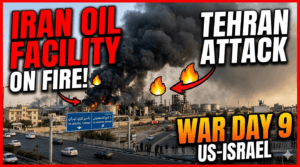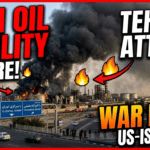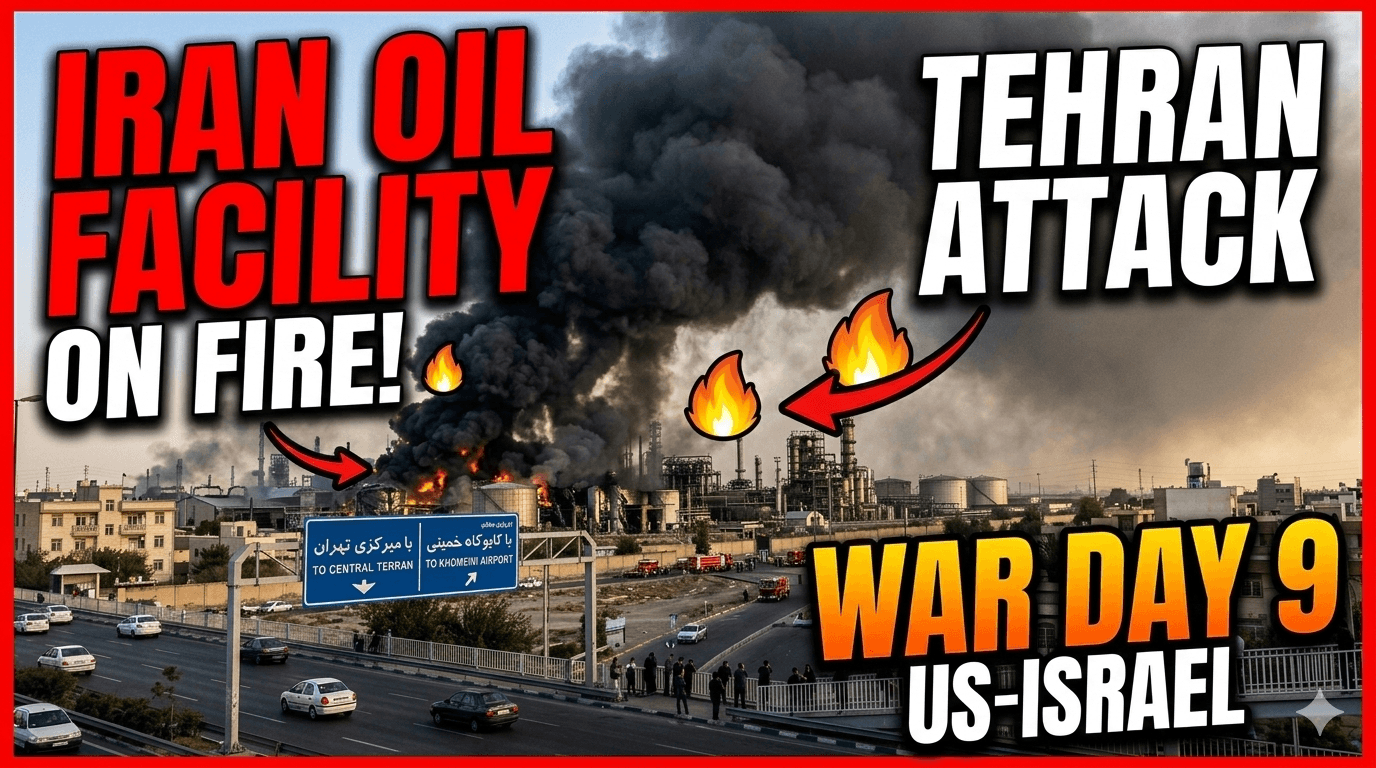
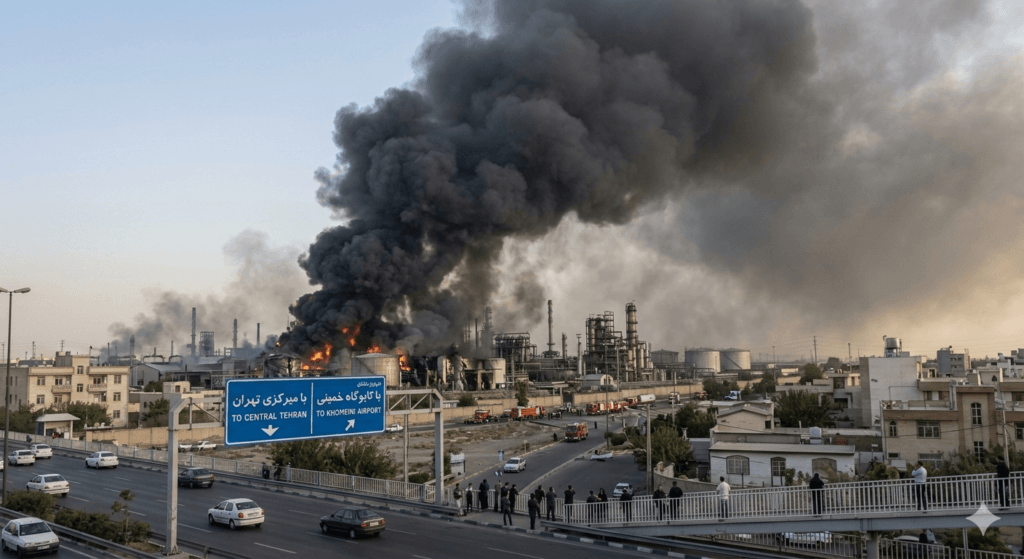
US-Israel war with Iran has entered the ninth day, and the conflict is increasingly targeting Iran’s critical oil and fuel infrastructure. Recent airstrikes have reportedly hit several oil storage facilities and fuel depots in the capital city of Tehran, leading to massive fires and the release of thick, noxious smoke into the atmosphere.
Residents of Tehran have described the situation in the city as critical, with the air being almost impossible to breathe due to the massive smoke from the burning fuel depots that has spread throughout the city. The situation has persisted for several hours, with the skyline being engulfed in dark smoke from the burning oil storage facilities and fuel depots in the city.
Residents have been warned by authorities of the potential dangers of the smoke and the possibility of rainfall in the coming days, which may contain harmful chemicals and acidic compounds that may be harmful to the skin, eyes, and lungs.
1. Why Iran’s Oil Facilities Were Targeted
The oil depots and fuel storage sites in Tehran were reportedly targeted because they are believed to support Iran’s military logistics and war operations. According to Israeli officials, some fuel facilities supply fuel and propellant used for military vehicles and missile systems.
By attacking these sites, the US-Israel coalition aims to:
- Disrupt Iran’s fuel supply for military operations.
- Reduce Iran’s ability to launch missiles and mobilize troops.
- Put economic and psychological pressure on the Iranian government and civilians.
Targeting energy infrastructure is also a strategic move because oil and fuel are critical assets for Iran’s economy and defense system.
2. What Caused the Toxic Smoke Cloud Over Tehran
The toxic smoke over Tehran was caused by massive fires at fuel depots and oil storage tanks after the airstrikes. When these facilities burned, they released large amounts of hydrocarbon fumes, soot, sulfur dioxide, and nitrogen oxides into the air.
These chemicals created:
- Thick black smoke covering large parts of the city.
- Dangerous air pollution that made breathing difficult.
- A dark haze that blocked sunlight in some areas.
Residents reported that the air felt “unbreathable” due to the dense smoke from burning fuel.
3. Reports of Acid Rain and Severe Air Pollution
Environmental agencies warned that the smoke contained toxic chemicals and pollutants. When these pollutants mixed with moisture in the clouds, they formed acidic rainfall, sometimes described as “black rain” or “oil rain.”
This rain could contain:
- Hydrocarbon residues
- Sulfur compounds
- Chemical particles from burning fuel
Health experts warned that exposure may cause:
- Skin burns or irritation
- Lung damage and breathing problems
- Eye irritation and respiratory illnesses
Because of this risk, authorities urged people to stay indoors and avoid contact with rainwater.
4. How the US-Israel vs Iran War Is Escalating
The conflict has rapidly intensified over the past nine days. What started as targeted military strikes has expanded into attacks on strategic infrastructure, including energy facilities.
Major escalation signs include:
- Strikes on oil depots and refineries inside Iran.
- Iranian missile and drone retaliation across the region.
- Attacks affecting Gulf countries and regional infrastructure.
This indicates the war is shifting from limited strikes to a wider regional conflict that could involve multiple countries.
5. Possible Impact on Global Oil Prices and World Politics
The Middle East produces a large portion of the world’s oil. When war threatens energy infrastructure in the region, global markets react quickly.
Possible impacts include:
Oil Prices
- Oil prices have already surged above $100 per barrel due to fears of supply disruption.
- If attacks expand to major export terminals, prices could rise further.
Global Economy
Higher oil prices may cause:
- Rising fuel costs worldwide
- Inflation in many countries
- Increased transportation and energy expenses
Geopolitics
The conflict may also reshape global alliances:
- The US and Israel strengthening military coordination
- Russia and China potentially backing Iran diplomatically
- Gulf countries becoming more directly involved
This could lead to a broader geopolitical confrontation in the Middle East.
✅ Summary:
The strikes on Iran’s oil infrastructure mark a dangerous new phase in the war. They have triggered environmental hazards like toxic smoke and acid rain in Tehran while raising concerns about a wider regional conflict and global energy instability.
FAQ
Our Recent Blogs:
Iranian Drones Strike U.S. Embassy in Riyadh — Fire, Damage Reported
INDIA Win ICC Men’s T20 World Cup 2026
War Impact: भारत में LPG, Petrol-Diesel महंगे, आम जनता पर बढ़ा बोझ
Nur Khan Airbase Incident Explained — Missile Strikes Not Nuclear Blast
Iran Crisis Breakdown Supporters of Iran, U.S. Strategy & India’s Position
AI Summit बना सियासी अखाड़ा! कांग्रेस की रणनीति पर उठे सवाल
India–Russia Mega Deal: Passenger Jets to Be Built Under New Aviation Partnership
Imran Khan Health Scare Sparks Protests | इमरान खान की सेहत पर बवाल, समर्थक सड़कों पर
Galgotia University Controversy at AI Summit Delhi | दिल्ली AI समिट में गलगोटिया यूनिवर्सिटी विवाद
Big Relief for Universities: SC Stops 2026 UGC Equity Rules | सामान्य जाति को बड़ी राहत
India–Pakistan Border Tensions: Strategic Breakdown & Conflict Risk Analysis
Will Russia and China act as mediators on Kashmir? Learn about India’s likely response || क्या कश्मीर पर रूस-चीन बनेंगे ‘मीडिएटर’? जानिए भारत की संभावित प्रतिक्रिया
Ind vs Pak T20 World Cup 2026: India Hammer Pakistan by 61 Runs
https://studyconscious.com/sarvam-ai-explained-indias-chatgpt-like-ai/
BNP’s Big Victory in Bangladesh: PM Modi Talks to Tarique Rahman, Calls for Peace and Progress
PM Modi Inaugurates New PMO ‘Seva Teerth’, Begins Work with Big Policy Decisions
#IranWar #USvsIran #IsraelIranWar #Tehran #IranOil #MiddleEastWar #WorldNews #Geopolitics #WarUpdate